
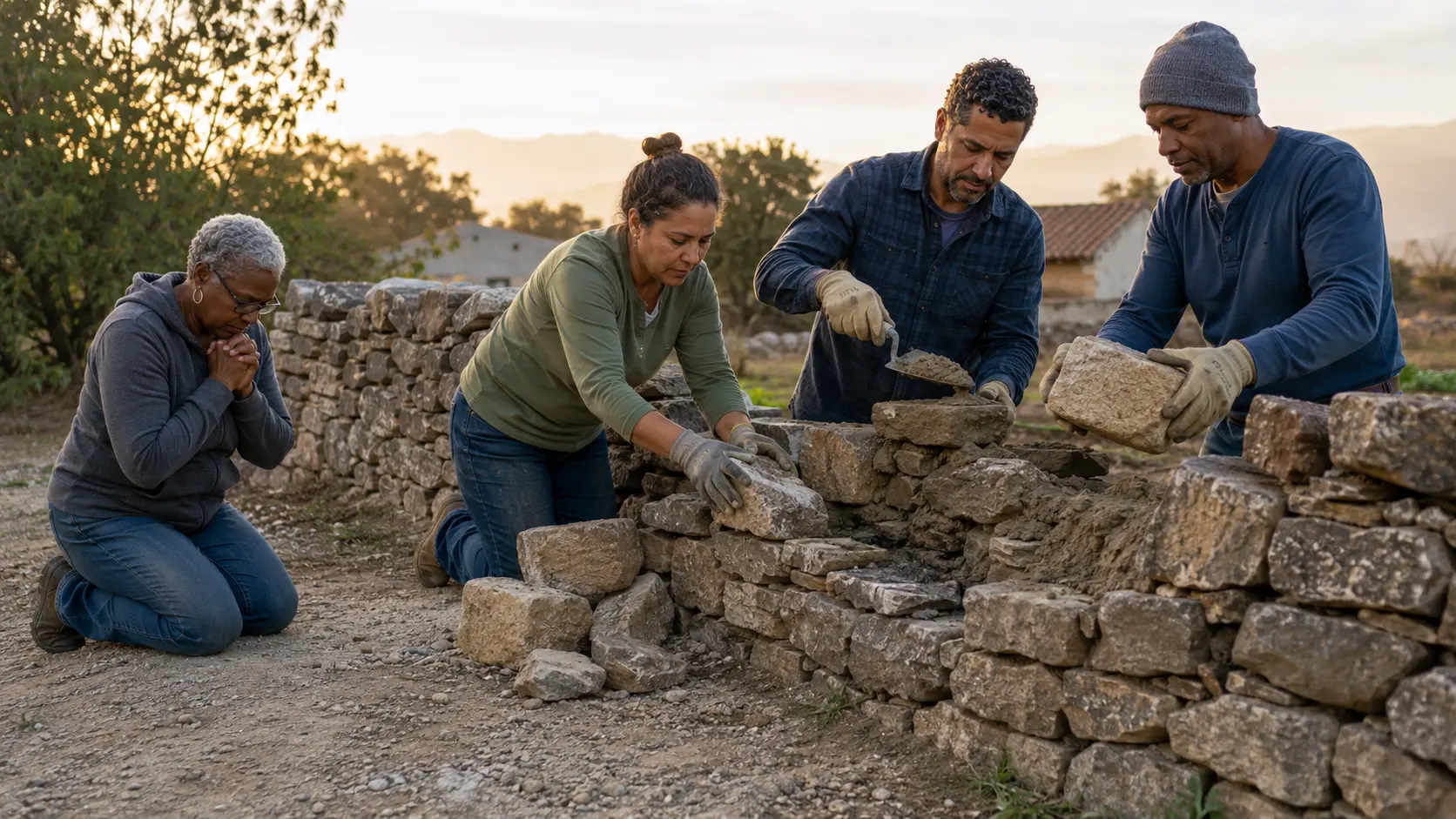
Replaced a Hebrew word absent from the verse and removed blame for others’ destruction from inadequate intercession.
About editions and corrections →FOUNDATIONAL READING · ESV
Ezekiel 22:30
Read the complete passage slowly before entering the reflection. Let the biblical text govern every application that follows.BIBLICAL WORD INSIGHT · HEBREW
THE WORD
Ezekiel 22 indicts rulers, priests, prophets, and the people for violence, exploitation, and corruption. Verse 30’s image of repairing a wall and standing in the breach belongs within that public moral collapse. The failure is not merely that someone missed a prayer session.
Perets means a breach or break. Paga, a word that can relate to intercession elsewhere, does not occur in this verse. Intercession is a fitting theological connection, but it should not be presented as the lexical meaning of a word absent from the passage.
Pray for others and act against wrongdoing. Protecting the vulnerable, telling the truth, and repairing unjust practices fit the chapter’s concerns. The passage does not make a bereaved person responsible for a death because they failed to pray enough. Responsibility for evil must not be transferred from its perpetrators to exhausted intercessors.
CONFRONTATION QUESTION
Where can prayer be joined to an actual act of protection or repair?
FAITH RESPONSE
🙏🏿 LET US GO INTO THE THRONE ROOM OF GRACE AND MERCY.™
Prayer
Truth must become practice.
Read Ezekiel 22:30 with its surrounding chapter. Pray for a community need and take one responsible step toward justice or care. Write what the text states, what you infer, and what you will practice.
Study the evidence
Read the surrounding argument before drawing an application. Scripture links open in a new tab.
Practice interpreting before teaching
- Observe: identify the speaker, audience, situation, and two statements the passage makes explicitly.
- Interpret: state the conclusion in your own words and explain which details support it. Mark any inference.
- Compare: give a reasonable alternative reading fairly. Explain why the context supports or weakens it.
- Apply: propose one present-day response. Identify what the passage does not promise and whose circumstances require care.
- Revise: check the title, illustration, prayer, and assignment against the same evidence. Change any statement that exceeds it.
A strong response names evidence, handles an objection fairly, and distinguishes application from the passage’s direct statement. Agreement with a teacher alone is not a demonstration of understanding.
Published commitments, teacher exercises, and revision record →