
FOUNDATIONAL READING · ESV
John 4:23–24
Read the complete passage slowly before entering the reflection. Let the biblical text govern every application that follows.BIBLICAL WORD INSIGHT · GREEK
THE WORD
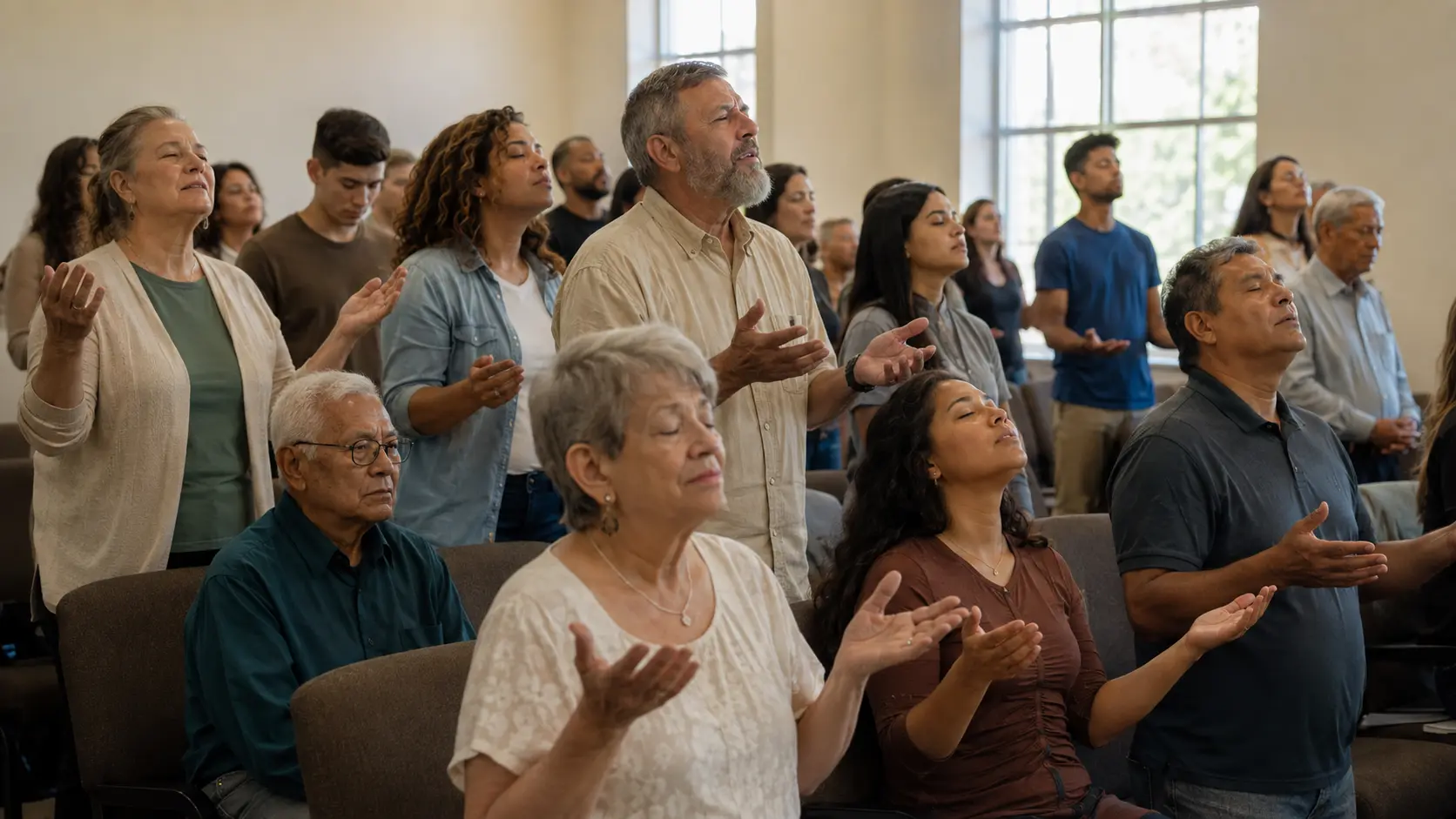
Jesus does not use the word “true” as a compliment for the people who are doing worship correctly — He uses it as a distinguishing category that implies false worship is possible, common, and entirely unacceptable to the Father. There is worship that is true, and there is worship that is not — and the difference is not the quality of the music, the expressiveness of the physical engagement, or the theological accuracy of the lyrics. The difference is the condition of the worshiper’s spirit and the alignment of the worshiper’s life with truth. Without those two conditions, what you are doing on Sunday morning is not worship. It is a religious performance — expertly executed, emotionally engaging, publicly credible, and spiritually hollow. And the Father is not looking for performers. He is seeking true worshipers. Worship in spirit means the engagement originates from within your regenerated human spirit, which is in genuine communion with the Holy Spirit of God.
It is not produced by the atmosphere, manufactured by the band, or induced by the light show and the crowd. It is the authentic overflow of a heart that is truly encountering the living God — not because the conditions are favorable but because the worshiper has cultivated a spirit that genuinely knows and loves and desires God. Spirit-worship cannot be faked. It can be mimicked — and very convincingly, especially for an audience of other people who have also learned to mimic the external expressions. But the Father who is Spirit knows the difference between the genuine overflow of a surrendered spirit and the religious performance of a person going through the motions of spiritual expression. He is not applauding the performance. He is seeking the genuine. Worship in truth means the worship is consistent with the actual Word of God and with the actual reality of your life. It is possible to sing “I surrender all” while withholding specific areas of your life from God’s lordship.
CONFRONTATION QUESTION
Does your worship on Sunday reflect the actual condition of your spirit and the actual alignment of your daily life with truth — or have you mastered the external expressions of worship while your spirit is disengaged and your life contradicts everything you declare?
FAITH RESPONSE
🙏🏿 LET US GO INTO THE THRONE ROOM OF GRACE AND MERCY.™
Prayer
Truth must become practice.
Today, engage in 15 minutes of private, unaccompanied, musical-instrument-free worship — just you, speaking or singing directly to God, with no performance aids. No playlist. No band. Just your voice and His presence. Then identify one specific contradiction between what you declare in worship and how you actually live, and make one concrete change today to close that gap. That is what worship in truth looks like in practice.
Study the evidence
Read the surrounding argument before drawing an application. Scripture links open in a new tab.
Practice interpreting before teaching
- Observe: identify the speaker, audience, situation, and two statements the passage makes explicitly.
- Interpret: state the conclusion in your own words and explain which details support it. Mark any inference.
- Compare: give a reasonable alternative reading fairly. Explain why the context supports or weakens it.
- Apply: propose one present-day response. Identify what the passage does not promise and whose circumstances require care.
- Revise: check the title, illustration, prayer, and assignment against the same evidence. Change any statement that exceeds it.
A strong response names evidence, handles an objection fairly, and distinguishes application from the passage’s direct statement. Agreement with a teacher alone is not a demonstration of understanding.
Published commitments, teacher exercises, and revision record →