
C H O F Ministry — Unified Manna™: Where Scripture Meets Innovation
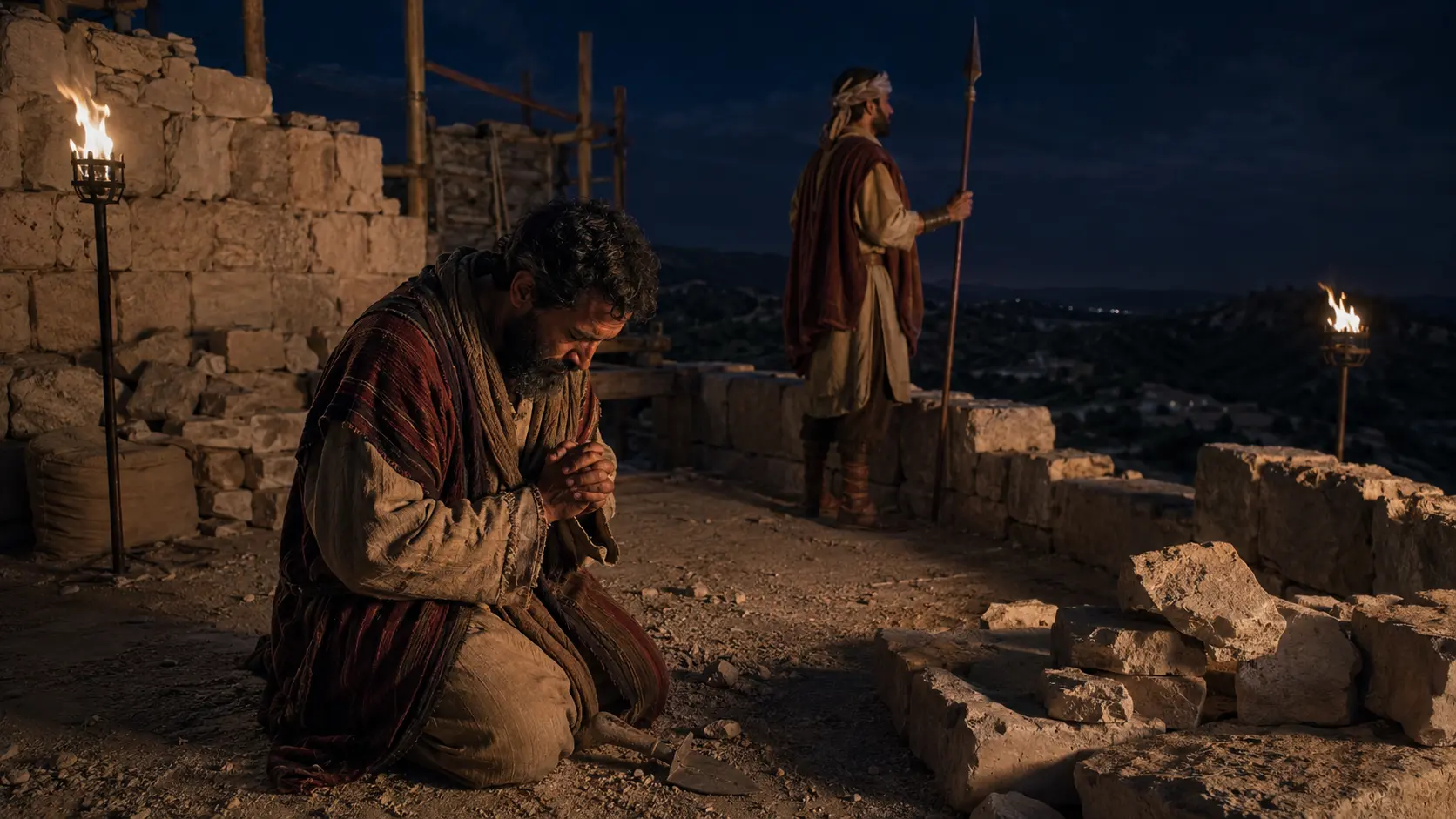
Nehemiah Prayed and Then Set a Guard
Nehemiah refused the false choice between dependence upon God and responsible action in the face of a credible threat.

FOUNDATIONAL SCRIPTURE · ESV
“And we prayed to our God and set a guard as a protection against them day and night.”Nehemiah 4:9 (ESV)
WISDOM WHISPERS™
“Faith prays because God is sovereign and acts because obedience has been given real hands, wisdom, and responsibility.”— Bishop W. F. Houston Jr.
Word StudyPalal means to pray or intercede. Nehemiah joined prayer to communal vigilance, treating divine help and wise preparation as partners rather than rivals.
THE DEVOTION
Jerusalem’s builders faced mockery, conspiracy, and the threat of violence. Nehemiah did not dismiss danger as negative thinking. The community prayed to God and posted a guard day and night. Their trust did not erase the threat; it governed a faithful response to it.
Some believers use prayer to avoid action. Others act as though outcomes rest entirely on human control. Nehemiah rejects both errors. Prayer confesses dependence, asks for wisdom, and keeps fear from becoming master. Responsible action uses the capacities, relationships, and safeguards God has already placed in our hands.
Setting a guard does not mean living in paranoia. The measures were proportionate to an identified danger and organized for communal protection. Churches and families should learn the same wisdom: safeguarding, medical care, financial controls, counseling, lawful reporting, and emergency planning do not compete with faith.
Nor does action guarantee control. Nehemiah remained dependent upon God while assigning roles, sharing information, and watching vulnerable points. Faithfulness is not omnipotence. We can prepare diligently and still need grace for outcomes beyond our reach.
Name the situation clearly. Pray before panic shapes the strategy. Seek informed counsel. Take the next proportionate step, and invite accountability so courage does not become recklessness. The wall is rebuilt by people who kneel, rise, cooperate, and keep watch together.
Study the evidence
Read the surrounding argument before drawing an application. Scripture links open in a new tab.
Practice interpreting before teaching
- Observe: identify the speaker, audience, situation, and two statements the passage makes explicitly.
- Interpret: state the conclusion in your own words and explain which details support it. Mark any inference.
- Compare: give a reasonable alternative reading fairly. Explain why the context supports or weakens it.
- Apply: propose one present-day response. Identify what the passage does not promise and whose circumstances require care.
- Revise: check the title, illustration, prayer, and assignment against the same evidence. Change any statement that exceeds it.
A strong response names evidence, handles an objection fairly, and distinguishes application from the passage’s direct statement. Agreement with a teacher alone is not a demonstration of understanding.
Published commitments, teacher exercises, and revision record →
Let Us Go Into The Throne Room Of Grace And Mercy.
Prayer
BENEDICTION