
C H O F Ministry — Unified Manna™: Where Scripture Meets Innovation
Faith Cried Out in the Storm
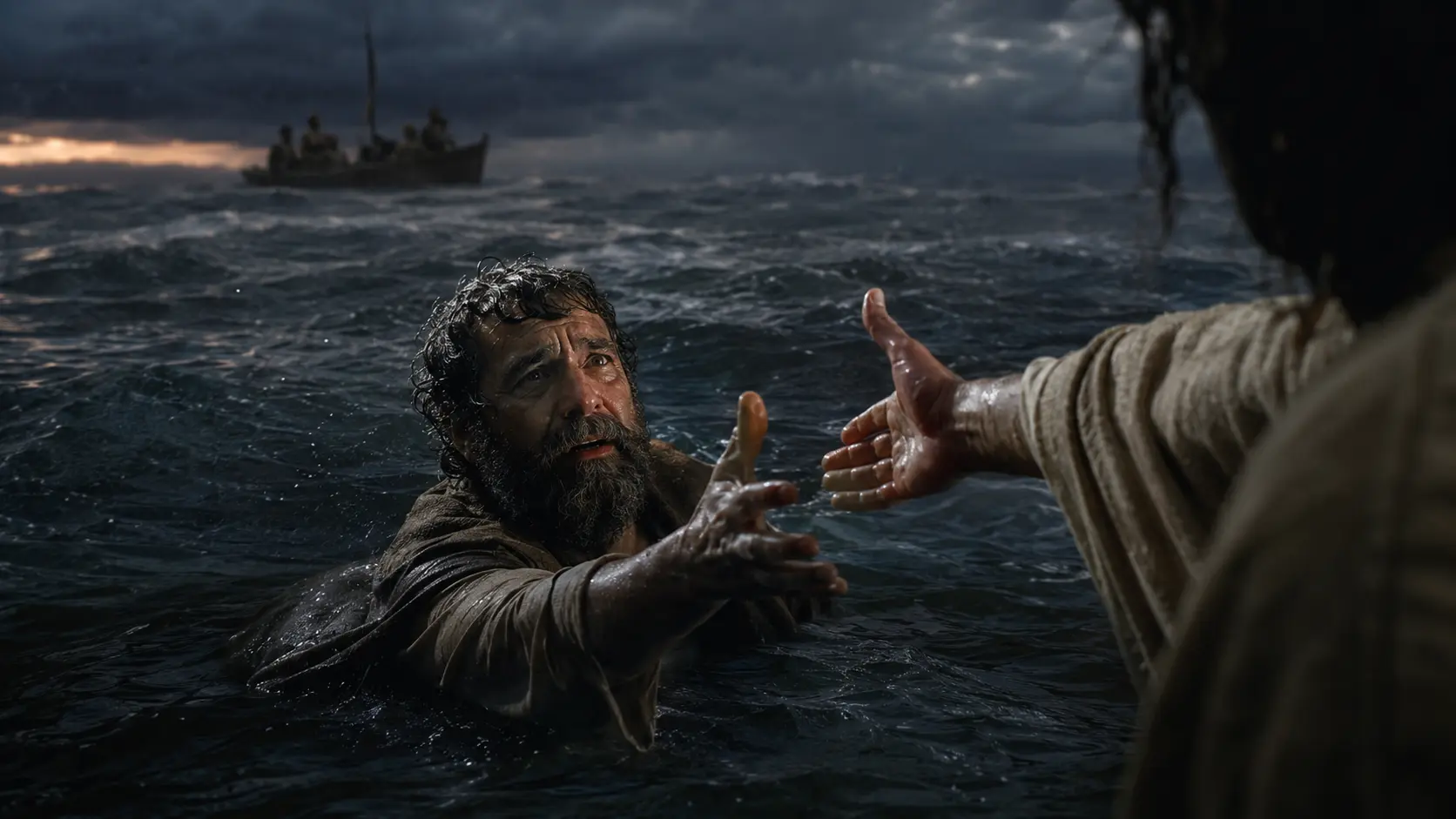
Peter’s fear did not end the story; his cry for help became the place where Jesus took hold of him.

FOUNDATIONAL SCRIPTURE · ESV
“But when he saw the wind, he was afraid, and beginning to sink he cried out, “Lord, save me.””Matthew 14:30 (ESV)
WISDOM WHISPERS™
“Peter’s fear did not end the story; his cry for help became the place where Jesus took hold of him.”— Bishop W. F. Houston Jr.
Word StudyBlepō means to see, notice, or direct attention. Peter perceived the dangerous wind, became afraid, and cried for rescue; noticing danger is not itself sin, and Christ met fear with an outstretched hand.
THE DEVOTION
Peter stepped from the boat at Jesus’ command and truly walked on the water. When he noticed the wind, fear overwhelmed his confidence and he began to sink. The text does not ridicule him for perceiving danger; storms are dangerous.
His brief prayer was enough: ‘Lord, save me.’ Jesus immediately reached out His hand. Faith is not the absence of a nervous system, and needing rescue is not proof that discipleship has failed.
We should not use this story to shame anxiety, trauma, or prudent attention to risk. Christian courage may include a safety plan, therapy, medication, weathering a crisis with others, or returning to the boat. The object of faith is Christ, not our ability to maintain a fearless feeling.
When fear narrows the horizon, cry out and reach toward the help God provides. A trembling disciple can still be held. The storm may expose limits, but it cannot keep Christ’s hand from meeting an honest prayer.
Study the evidence
Read the surrounding argument before drawing an application. Scripture links open in a new tab.
Practice interpreting before teaching
- Observe: identify the speaker, audience, situation, and two statements the passage makes explicitly.
- Interpret: state the conclusion in your own words and explain which details support it. Mark any inference.
- Compare: give a reasonable alternative reading fairly. Explain why the context supports or weakens it.
- Apply: propose one present-day response. Identify what the passage does not promise and whose circumstances require care.
- Revise: check the title, illustration, prayer, and assignment against the same evidence. Change any statement that exceeds it.
A strong response names evidence, handles an objection fairly, and distinguishes application from the passage’s direct statement. Agreement with a teacher alone is not a demonstration of understanding.
Published commitments, teacher exercises, and revision record →
Let Us Go Into The Throne Room Of Grace And Mercy.
Prayer
BENEDICTION