
C H O F Ministry — Unified Manna™: Where Scripture Meets Innovation
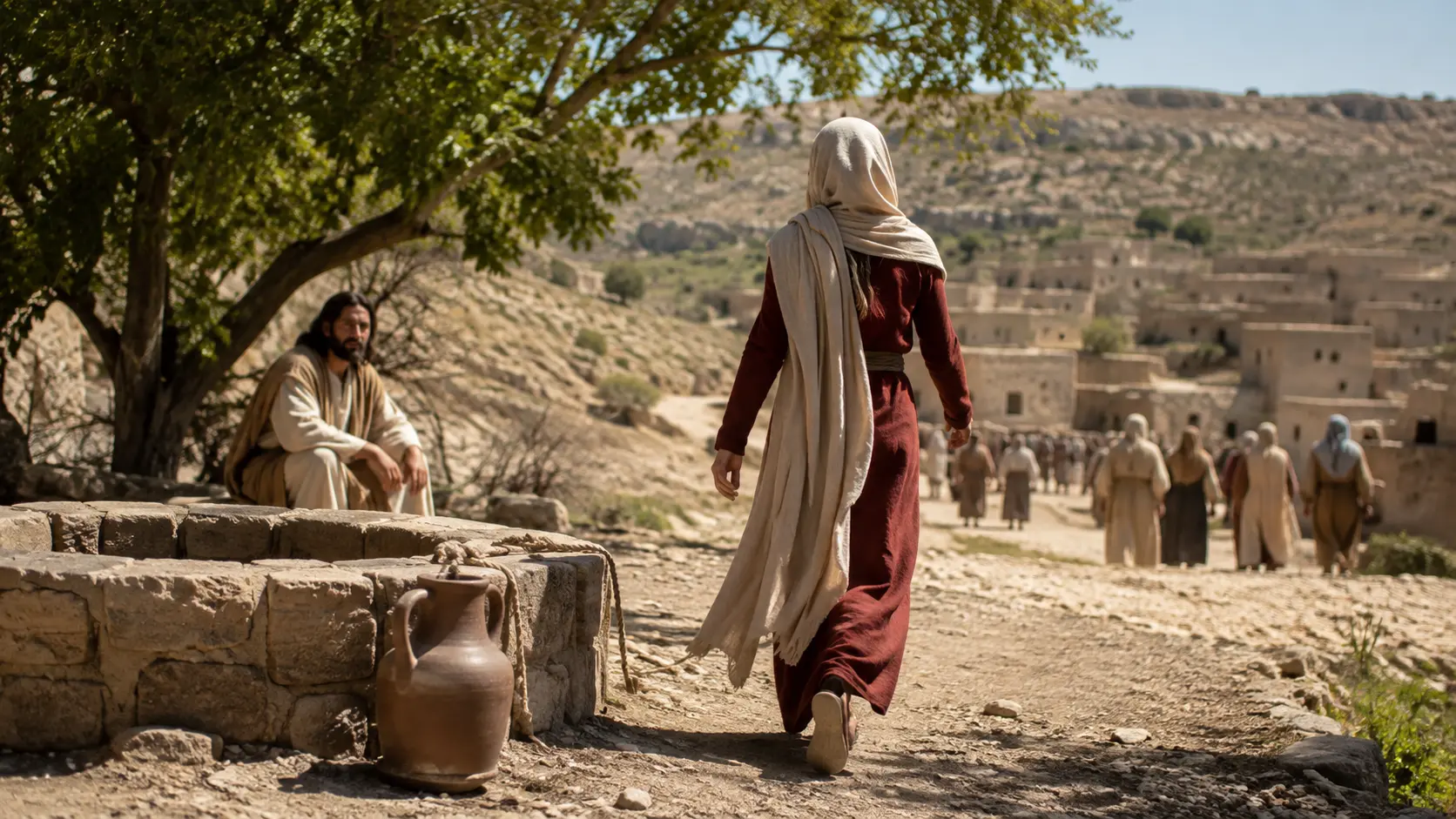
She Left the Jar Long Enough to Tell the Town
The Samaritan woman’s hurried witness grew from being known by Jesus, not from shame or permanent escape from ordinary life.

FOUNDATIONAL SCRIPTURE · ESV
“So the woman left her water jar and went away into town and said to the people, “Come, see a man who told me all that I ever did.””John 4:28-29 (ESV)
WISDOM WHISPERS™
“The Samaritan woman’s hurried witness grew from being known by Jesus, not from shame or permanent escape from ordinary life.”— Bishop W. F. Houston Jr.
Word StudyHudria names the water jar used for drawing and carrying water. John notes that she left it at the well as she hurried to tell the town what had happened.
THE DEVOTION
Jesus initiated conversation across gender, ethnic, and religious boundaries. He neither ignored the woman’s history nor reduced her to it. He offered living water and revealed His identity with uncommon clarity.
John says she left her jar and went into town. The detail communicates urgency, not a command to abandon work, home, or practical responsibilities after meeting Christ. Grace reorders ordinary life; it does not despise it.
Her testimony was modest and inviting: ‘Come, see a man who told me all that I ever did. Can this be the Christ?’ She did not present herself as an instant expert. She brought neighbors toward encounter.
Leave the jar long enough to tell the truth, then let discipleship return you to life with new dignity. Witness does not require exaggeration. Name what Jesus has done, honor the hearer’s freedom, and point beyond yourself to Christ.
Study the evidence
Read the surrounding argument before drawing an application. Scripture links open in a new tab.
Practice interpreting before teaching
- Observe: identify the speaker, audience, situation, and two statements the passage makes explicitly.
- Interpret: state the conclusion in your own words and explain which details support it. Mark any inference.
- Compare: give a reasonable alternative reading fairly. Explain why the context supports or weakens it.
- Apply: propose one present-day response. Identify what the passage does not promise and whose circumstances require care.
- Revise: check the title, illustration, prayer, and assignment against the same evidence. Change any statement that exceeds it.
A strong response names evidence, handles an objection fairly, and distinguishes application from the passage’s direct statement. Agreement with a teacher alone is not a demonstration of understanding.
Published commitments, teacher exercises, and revision record →
Let Us Go Into The Throne Room Of Grace And Mercy.
Prayer
BENEDICTION