
C H O F Ministry — Unified Manna™: Where Scripture Meets Innovation
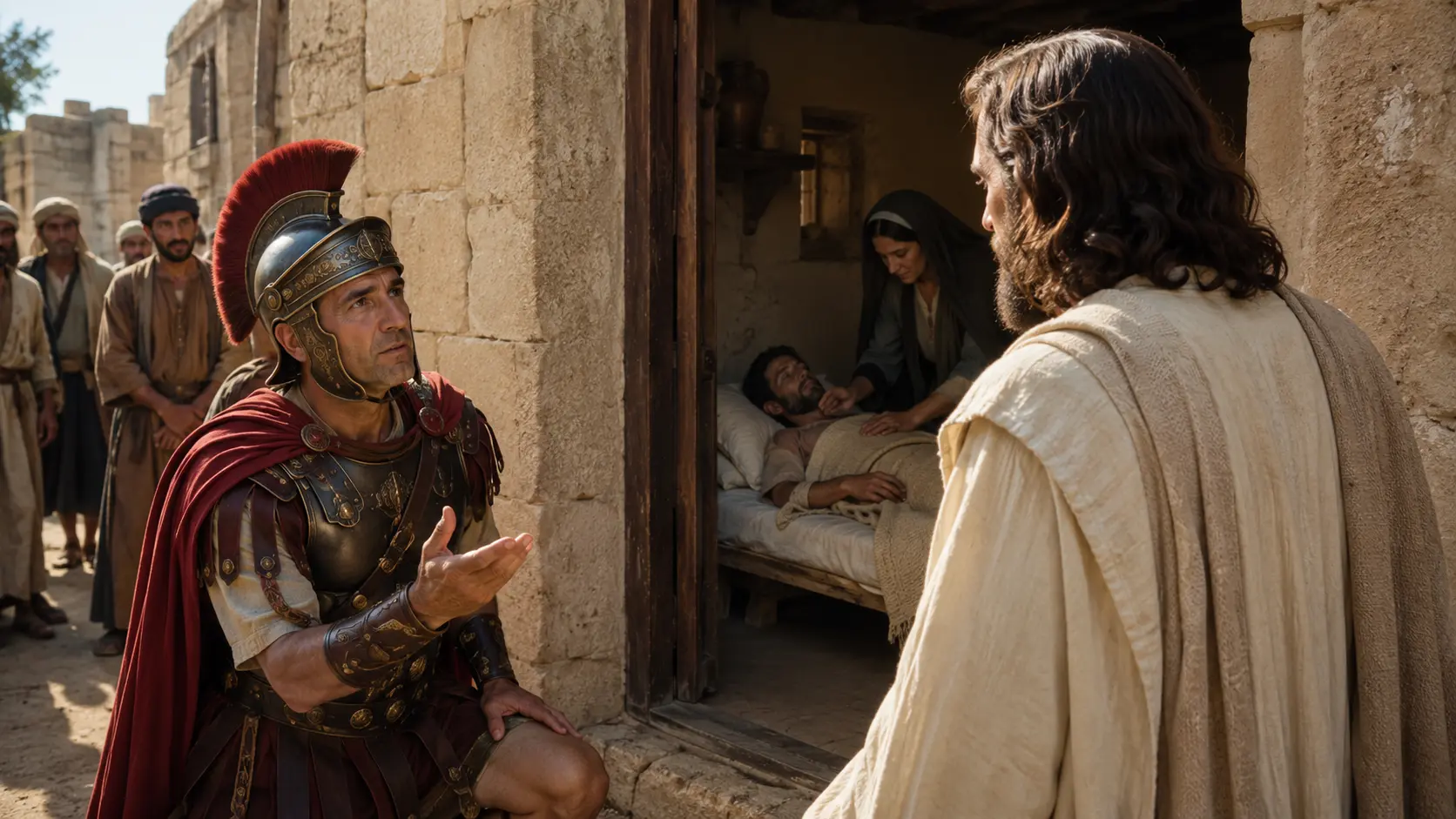
The Centurion Trusted the Authority of Jesus
The centurion’s military analogy was imperfect, yet it expressed remarkable humility and confidence in the effective word of Jesus.

FOUNDATIONAL SCRIPTURE · ESV
“For I too am a man under authority, with soldiers under me... When Jesus heard this, he marveled.”Matthew 8:9-10 (ESV)
WISDOM WHISPERS™
“The centurion’s military analogy was imperfect, yet it expressed remarkable humility and confidence in the effective word of Jesus.”— Bishop W. F. Houston Jr.
Word StudyExousia refers to authority, right, or delegated power. The centurion used his experience of command to confess that Jesus could heal without physical proximity.
THE DEVOTION
A Roman centurion represented an occupying empire and held authority over soldiers and an enslaved servant. The text does not sanctify empire, slavery, or authoritarian leadership. It records a powerful man humbling himself because someone in his household was suffering.
The centurion recognized that Jesus did not need to enter his house for His word to be effective. His analogy came from military command, but the authority of Christ is different in character: Jesus heals, serves, welcomes outsiders, and gives Himself for enemies.
We must not use this passage to demand unquestioning submission to religious leaders. Christian authority remains accountable to Christ, Scripture, truth, justice, safeguarding, and the good of those served. Abuse of power contradicts the Lord whose authority restores life.
Bring need to Jesus with the centurion’s humility. Trust His authority without claiming control over the outcome, and let that trust reshape your own use of influence. The greater the authority, the deeper the responsibility to protect and serve.
Study the evidence
Read the surrounding argument before drawing an application. Scripture links open in a new tab.
Practice interpreting before teaching
- Observe: identify the speaker, audience, situation, and two statements the passage makes explicitly.
- Interpret: state the conclusion in your own words and explain which details support it. Mark any inference.
- Compare: give a reasonable alternative reading fairly. Explain why the context supports or weakens it.
- Apply: propose one present-day response. Identify what the passage does not promise and whose circumstances require care.
- Revise: check the title, illustration, prayer, and assignment against the same evidence. Change any statement that exceeds it.
A strong response names evidence, handles an objection fairly, and distinguishes application from the passage’s direct statement. Agreement with a teacher alone is not a demonstration of understanding.
Published commitments, teacher exercises, and revision record →
Let Us Go Into The Throne Room Of Grace And Mercy.
Prayer
BENEDICTION