
C H O F Ministry — Unified Manna™: Where Scripture Meets Innovation
The Gift That Sat Unopened Because of Fear
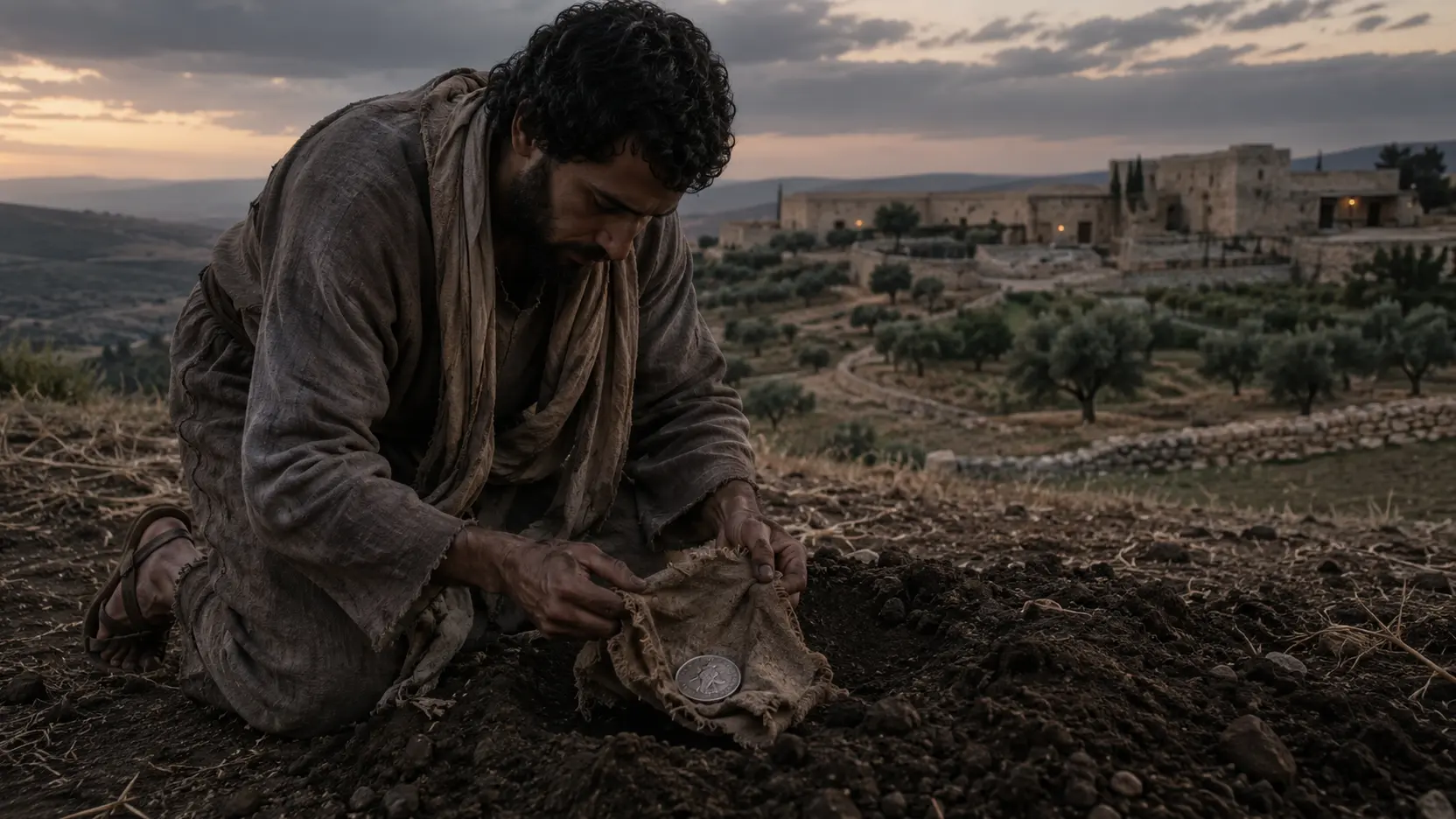
The one-talent servant did not lose the money. He lost the increase. Buried fear returns exactly what it was given — and nothing more.

Corrected the word panel to match the parable and its already revised stewardship application.
About editions and corrections →FOUNDATIONAL SCRIPTURE · ESV
“So I was afraid, and I went and hid your talent in the ground. Here, you have what is yours.”Matthew 25:25 (ESV)
WISDOM WHISPERS™
“The one-talent servant did not lose the money. He lost the increase. Buried fear returns exactly what it was given — and nothing more.”— Bishop W. F. Houston Jr.
Word Studylazy or hesitant. The master calls the servant both wicked and slothful in Matthew 25:26. The talents are entrusted money; applying the parable to abilities is a further analogy, not the meaning of the monetary term.
THE DEVOTION
The third servant protected what had been entrusted, but fear turned protection into paralysis. A talent in Jesus’ parable was a large unit of money, and the story belongs to His teaching about accountable kingdom stewardship—not a promise that every personal risk will produce profit.
The servant’s distorted view of the master mattered. He acted from fear rather than faithful responsibility. Fear can make obedience look like recklessness and concealment look like wisdom, but courage is not the same as gambling, impulsive investing, or ignoring counsel.
Faithful stewardship begins by identifying what has actually been entrusted: time, truth, relationships, skills, opportunities, resources, and responsibilities. Each must be handled according to Scripture, wise counsel, integrity, and the good of those affected—not merely according to ambition.
Do not bury what love requires you to steward, but do not baptize every risky impulse as faith. Bring fear into the light, make a responsible plan, accept accountability, and take the next measured act of obedience. The goal is not impressive increase; it is faithfulness before the Master.
Study the evidence
Read the surrounding argument before drawing an application. Scripture links open in a new tab.
Practice interpreting before teaching
- Observe: identify the speaker, audience, situation, and two statements the passage makes explicitly.
- Interpret: state the conclusion in your own words and explain which details support it. Mark any inference.
- Compare: give a reasonable alternative reading fairly. Explain why the context supports or weakens it.
- Apply: propose one present-day response. Identify what the passage does not promise and whose circumstances require care.
- Revise: check the title, illustration, prayer, and assignment against the same evidence. Change any statement that exceeds it.
A strong response names evidence, handles an objection fairly, and distinguishes application from the passage’s direct statement. Agreement with a teacher alone is not a demonstration of understanding.
Published commitments, teacher exercises, and revision record →
Let Us Go Into The Throne Room Of Grace And Mercy.
Prayer
BENEDICTION