
C H O F Ministry — Unified Manna™: Where Scripture Meets Innovation
The Widow’s Gift Exposed More Than Generosity
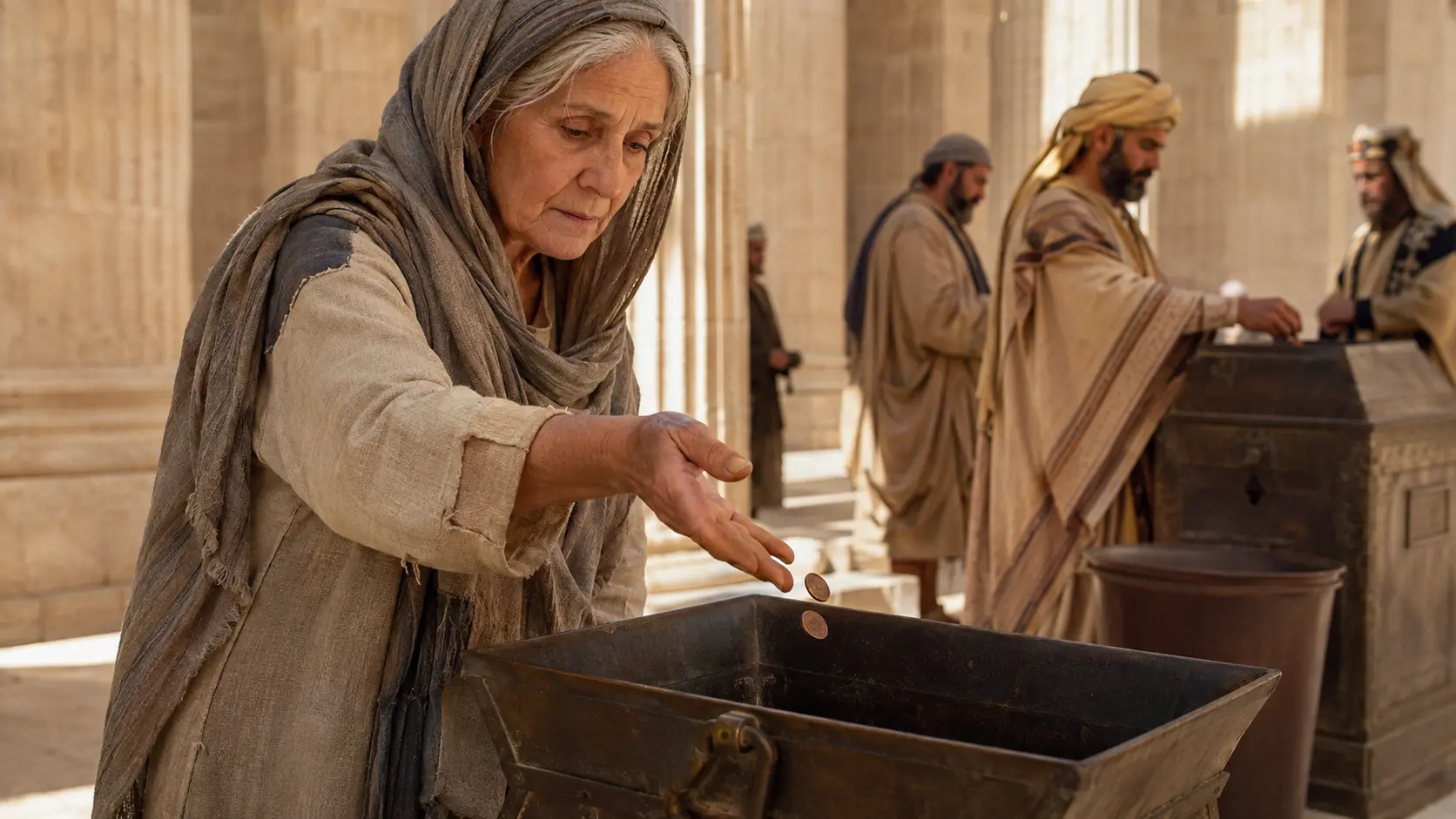
Jesus saw both a courageous widow and a religious system responsible to protect her.

FOUNDATIONAL SCRIPTURE · ESV
“For they all contributed out of their abundance, but she out of her poverty has put in everything she had, all she had to live on.”Mark 12:44 (ESV)
WISDOM WHISPERS™
“Jesus saw both a courageous widow and a religious system responsible to protect her.”— Bishop W. F. Houston Jr.
Word StudyA lepton was one of the smallest copper coins in circulation. Jesus saw the widow’s proportionate sacrifice while the surrounding context also warns leaders against systems that consume widows rather than protect them.
THE DEVOTION
Jesus watched wealthy worshipers place large gifts into the treasury, then noticed a widow offering two tiny coins. He honored what others overlooked: not the size of the gift, but the truth of the giver’s costly trust.
Yet Mark places this scene beside Jesus’ warning that some leaders devour widows’ houses. The passage must never become a fundraising weapon that pressures vulnerable people to empty what they need for food, housing, medicine, or safety. The church is called to protect widows, not admire their depletion while benefiting from it.
Generosity is grace, not coercion. Christian leaders should teach transparent stewardship, reject manipulation, and make room for people to give freely according to their means. Those with abundance carry a greater responsibility; those in need are worthy of support, not shame.
Let the widow’s gift search both heart and system. Give without performance, receive without exploitation, and build a community where sacrificial love moves in every direction—especially toward those whom society has learned not to see.
Study the evidence
Read the surrounding argument before drawing an application. Scripture links open in a new tab.
Practice interpreting before teaching
- Observe: identify the speaker, audience, situation, and two statements the passage makes explicitly.
- Interpret: state the conclusion in your own words and explain which details support it. Mark any inference.
- Compare: give a reasonable alternative reading fairly. Explain why the context supports or weakens it.
- Apply: propose one present-day response. Identify what the passage does not promise and whose circumstances require care.
- Revise: check the title, illustration, prayer, and assignment against the same evidence. Change any statement that exceeds it.
A strong response names evidence, handles an objection fairly, and distinguishes application from the passage’s direct statement. Agreement with a teacher alone is not a demonstration of understanding.
Published commitments, teacher exercises, and revision record →
Let Us Go Into The Throne Room Of Grace And Mercy.
Prayer
BENEDICTION