
C H O F Ministry — Unified Manna™: Where Scripture Meets Innovation
Love Can Remain Present in the Delay
A delayed answer is not proof of absent love, and it is not a guarantee that every request will end as we expect.

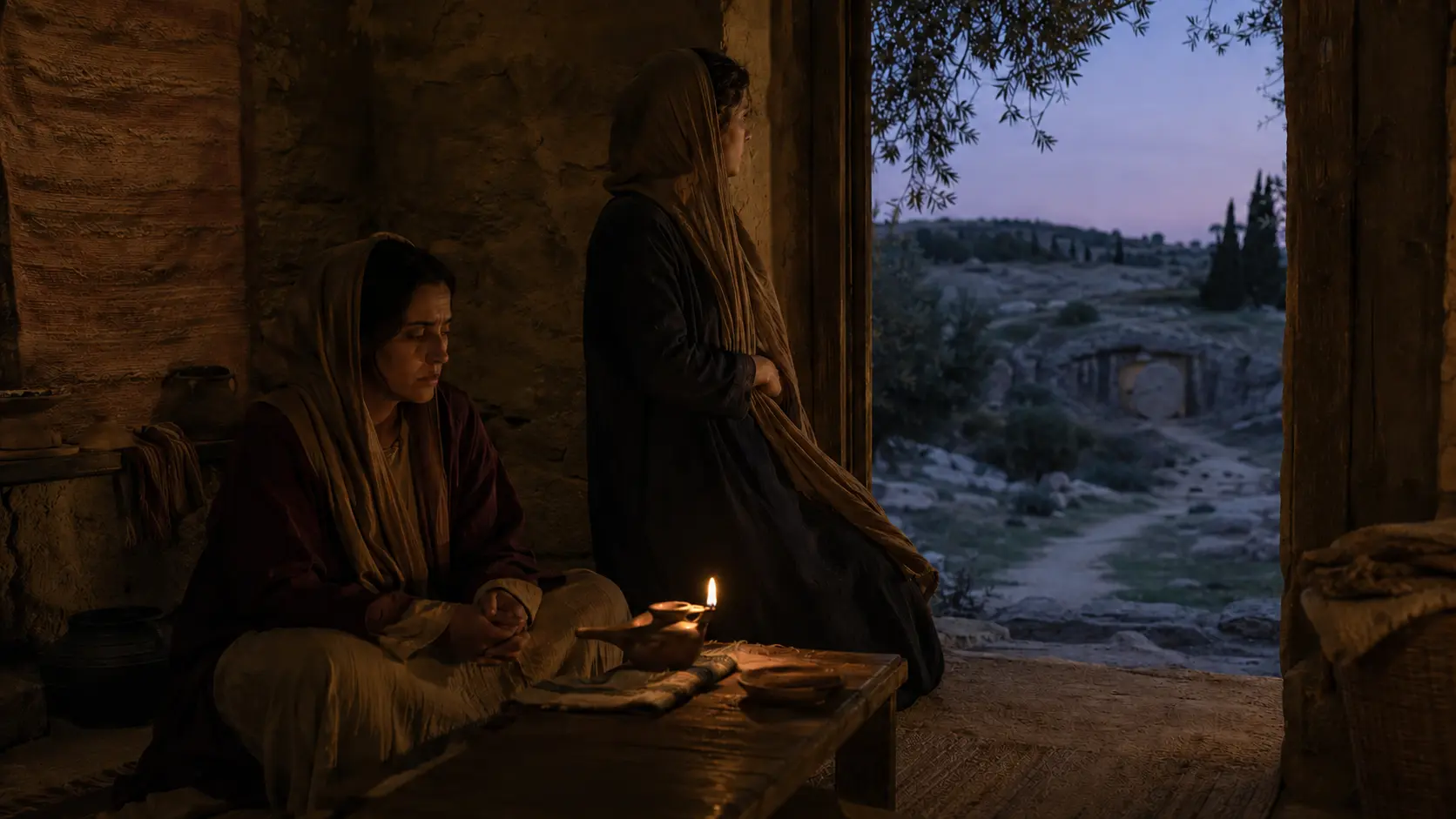
FOUNDATIONAL SCRIPTURE · ESV
“Now Jesus loved Martha and her sister and Lazarus. So, when he heard that Lazarus was ill, he stayed two days longer in the place where he was.”John 11:5-6 (ESV)
WISDOM WHISPERS™
“A delayed answer is not proof of absent love, and it is not a guarantee that every request will end as we expect.”— Bishop W. F. Houston Jr.
Word StudyMenō means to remain, stay, or abide. Jesus deliberately remained two more days within this particular story; the verb describes His action without becoming a universal promise that every delayed request will end the same way.
THE DEVOTION
John carefully says that Jesus loved Martha, Mary, and Lazarus—and then tells us He remained where He was two more days. Love was present even when help did not arrive on the sisters’ timetable.
This story ends in resurrection, but it does not authorize the slogan that every delay is a disguised yes. Faithful people sometimes receive a different answer, a long wait, or no explanation in this life. We should never blame the grieving for lacking faith or promise an outcome God has not promised.
Martha and Mary spoke honestly: ‘Lord, if you had been here.’ Jesus did not reject their lament. He entered it, wept, and acted according to the Father’s purpose. Biblical waiting can include tears, questions, medical care, counsel, practical action, and the support of community.
If you are in the waiting house, do not mistake silence for abandonment. Bring God the whole truth, take every wise step available, and let others sit beside you. Love can remain real before the stone moves—and even when the answer takes a shape you did not expect.
Study the evidence
Read the surrounding argument before drawing an application. Scripture links open in a new tab.
Practice interpreting before teaching
- Observe: identify the speaker, audience, situation, and two statements the passage makes explicitly.
- Interpret: state the conclusion in your own words and explain which details support it. Mark any inference.
- Compare: give a reasonable alternative reading fairly. Explain why the context supports or weakens it.
- Apply: propose one present-day response. Identify what the passage does not promise and whose circumstances require care.
- Revise: check the title, illustration, prayer, and assignment against the same evidence. Change any statement that exceeds it.
A strong response names evidence, handles an objection fairly, and distinguishes application from the passage’s direct statement. Agreement with a teacher alone is not a demonstration of understanding.
Published commitments, teacher exercises, and revision record →
Let Us Go Into The Throne Room Of Grace And Mercy.
Prayer
BENEDICTION