
C H O F Ministry — Unified Manna™: Where Scripture Meets Innovation
Midnight Cannot Silence Your Song
Praise does not control the outcome; it keeps suffering from becoming the master of the soul.

FOUNDATIONAL SCRIPTURE · ESV
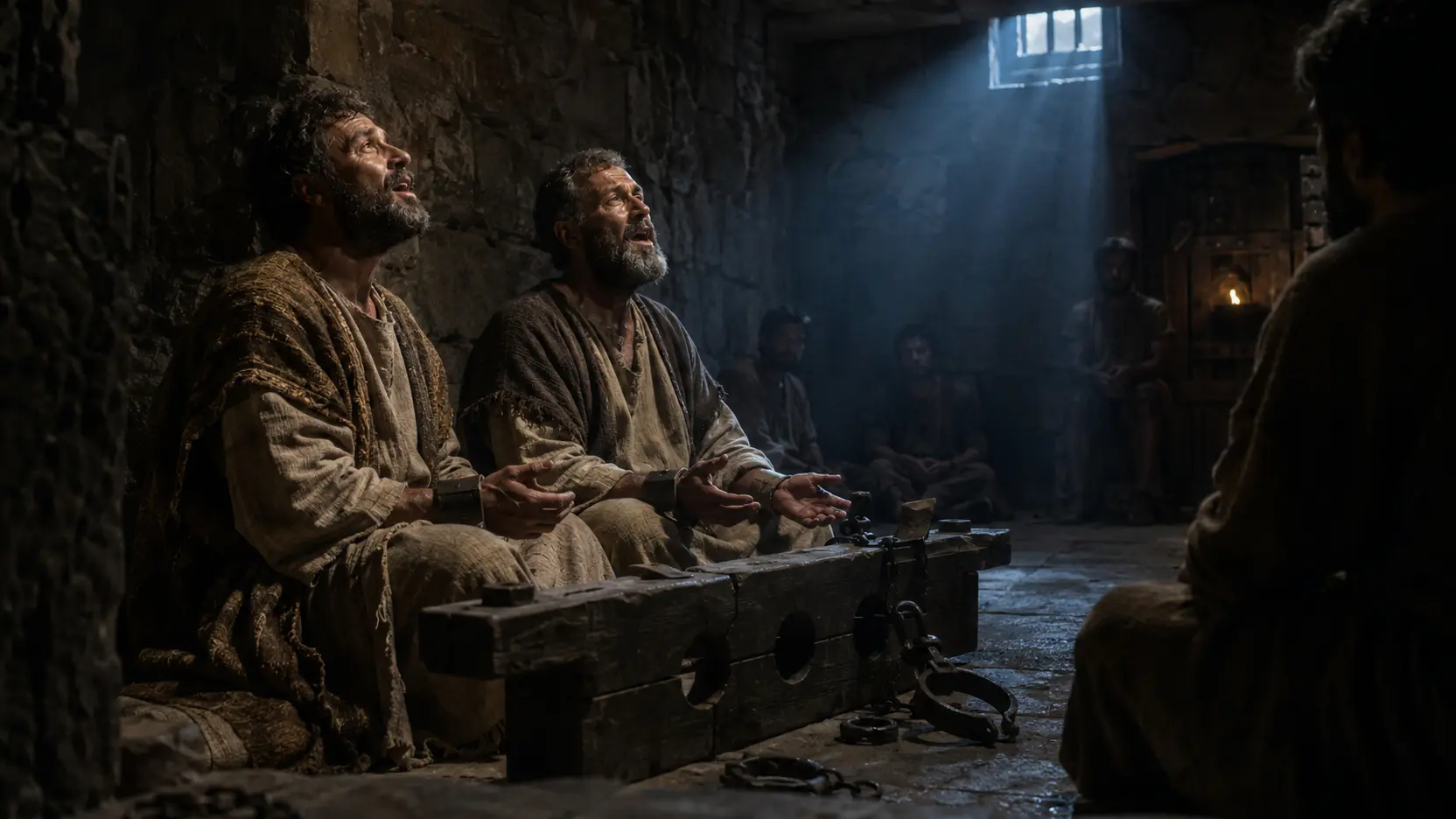
“About midnight Paul and Silas were praying and singing hymns to God, and the prisoners were listening to them.”Acts 16:25 (ESV)
WISDOM WHISPERS™
“Praise does not control the outcome; it keeps suffering from becoming the master of the soul.”— Bishop W. F. Houston Jr.
Word Studyto sing a hymn, to praise in song — the deliberate offering of worship regardless of circumstance. Paul and Silas humneo'd at midnight, backs bleeding, feet in stocks. Praise that costs something in the dark carries a power praise in the light never learns.
THE DEVOTION
Paul and Silas had been beaten, confined, and placed in stocks. Acts does not ask us to romanticize their pain. The injustice was real. Yet at midnight they prayed and sang hymns, and the other prisoners listened. Their worship told the truth about God inside a place built to silence them.
The Greek verb hymneō means to sing a hymn or song of praise. They did not sing because chains felt pleasant or because sorrow was forbidden. They sang because imprisonment did not possess the final word over their allegiance.
The earthquake that followed was God’s action in a particular narrative, not a formula we can reproduce by reaching the correct emotional intensity. Praise does not guarantee an immediate breakthrough, replace lawful advocacy, or make medical and psychological care unnecessary. Biblical worship can sing, lament, seek help, and wait.
Your midnight may not end tonight, but it does not have to own your voice. Pray honestly. Name God’s character. Receive the help available. Let worship become faithful witness rather than a lever for controlling Heaven. The cell may shape the acoustics, but it cannot decide whom the soul belongs to.
Study the evidence
Read the surrounding argument before drawing an application. Scripture links open in a new tab.
Practice interpreting before teaching
- Observe: identify the speaker, audience, situation, and two statements the passage makes explicitly.
- Interpret: state the conclusion in your own words and explain which details support it. Mark any inference.
- Compare: give a reasonable alternative reading fairly. Explain why the context supports or weakens it.
- Apply: propose one present-day response. Identify what the passage does not promise and whose circumstances require care.
- Revise: check the title, illustration, prayer, and assignment against the same evidence. Change any statement that exceeds it.
A strong response names evidence, handles an objection fairly, and distinguishes application from the passage’s direct statement. Agreement with a teacher alone is not a demonstration of understanding.
Published commitments, teacher exercises, and revision record →
Let Us Go Into The Throne Room Of Grace And Mercy.
Prayer
BENEDICTION