
C H O F Ministry — Unified Manna™: Where Scripture Meets Innovation
The Wheat and Weeds Await God’s Judgment
Jesus forbids impatient final sorting while leaving His people responsible for truth, protection, discipline, and faithful growth in a mixed field.

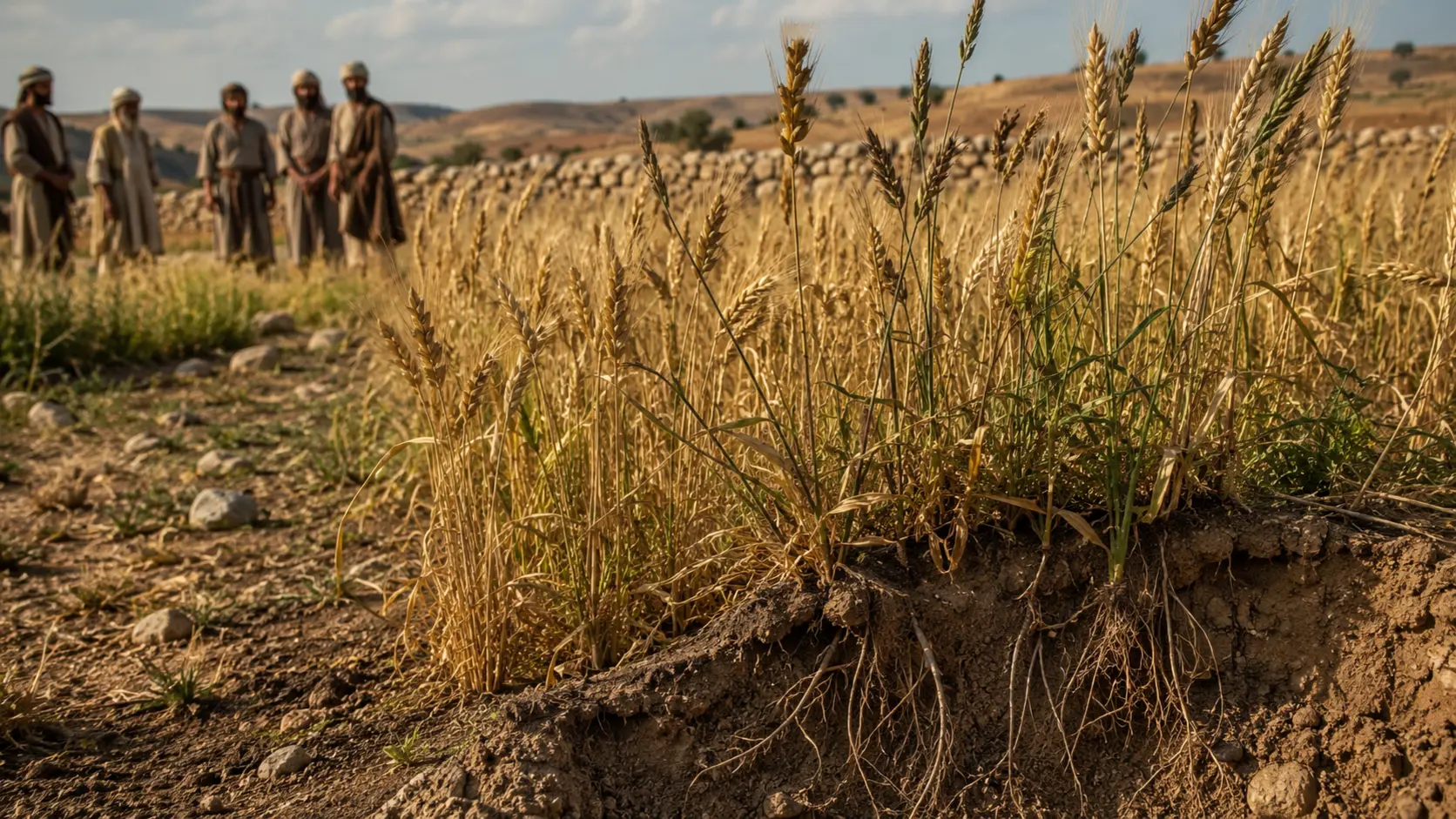
FOUNDATIONAL SCRIPTURE · ESV
“But he said, ‘No, lest in gathering the weeds you root up the wheat along with them. Let both grow together until the harvest.’”Matthew 13:29–30 (ESV)
WISDOM WHISPERS™
“Leaving final judgment to God does not mean leaving vulnerable people unprotected while harm grows unchecked.”— Bishop W. F. Houston Jr.
Word StudyZizanion refers to darnel, a weed resembling wheat in early growth. The parable warns against premature final judgment and promises a harvest under God’s authority.
THE DEVOTION
Jesus explains that the field is the world, the good seed belongs to the kingdom, the weeds to the evil one, and the harvest is the close of the age. The parable assures disciples that evil’s present mixture with good is not evidence that God has lost the field.
The servants are restrained from uprooting because their premature sorting would damage wheat. This is a warning against assuming God’s final knowledge, dehumanizing opponents, or using religious power to purge everyone we label false. The final harvest belongs to God’s appointed judgment.
Yet the parable must not be weaponized against accountability. Jesus also teaches confrontation, church discipline, protection of the vulnerable, truthful witness, and obedience to governing authorities where appropriate. A congregation may remove a dangerous leader, report abuse, establish boundaries, and still leave eternal judgment to God.
Patience is not indifference. It makes room for repentance, limits collateral damage, and refuses revenge. Discernment examines fruit without pretending to see every heart. Justice restrains harm without claiming divine permission for cruelty.
Grow as wheat: receive the Word, practice righteousness, protect neighbors, and resist the urge to build identity around condemning another person. Trust the Judge with the harvest while doing the faithful work assigned in the field today. God’s patience is mercy, and God’s promised judgment means evil will not remain forever.
Study the evidence
Read the surrounding argument before drawing an application. Scripture links open in a new tab.
Practice interpreting before teaching
- Observe: identify the speaker, audience, situation, and two statements the passage makes explicitly.
- Interpret: state the conclusion in your own words and explain which details support it. Mark any inference.
- Compare: give a reasonable alternative reading fairly. Explain why the context supports or weakens it.
- Apply: propose one present-day response. Identify what the passage does not promise and whose circumstances require care.
- Revise: check the title, illustration, prayer, and assignment against the same evidence. Change any statement that exceeds it.
A strong response names evidence, handles an objection fairly, and distinguishes application from the passage’s direct statement. Agreement with a teacher alone is not a demonstration of understanding.
Published commitments, teacher exercises, and revision record →
Let Us Go Into The Throne Room Of Grace And Mercy.
Prayer
BENEDICTION