
C H O F Ministry — Unified Manna™: Where Scripture Meets Innovation
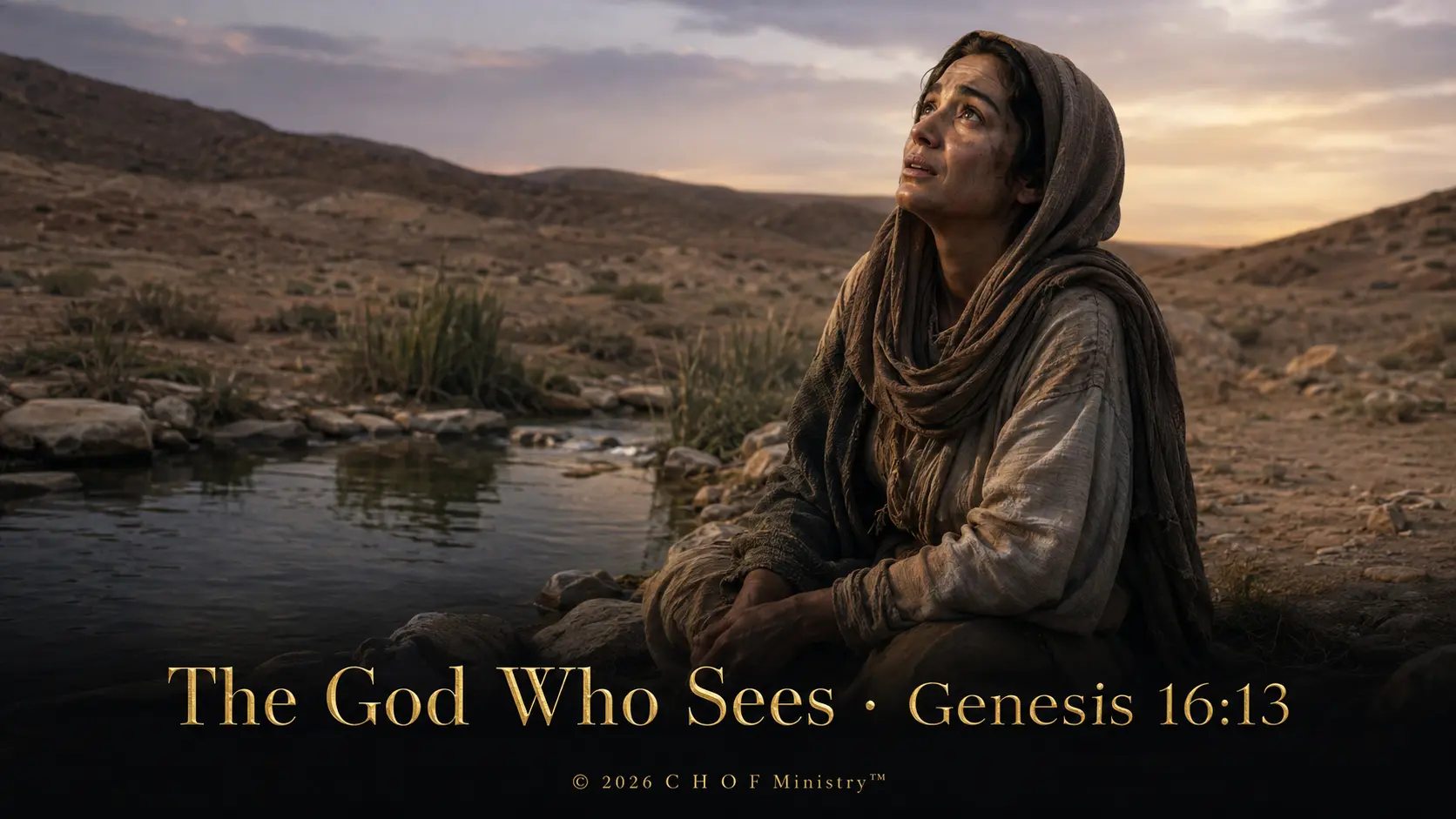
The God Who Sees Hagar
Heaven does not read your résumé. It reads your name. God finds the ones the world writes off.

Distinguished Genesis 16 from Genesis 21 and removed invented shame, intention to die, and a blanket diagnosis of readers.
Previously titled: “He Called You by the Name You Were Ashamed Of.” The existing address is retained.
About editions and corrections →FOUNDATIONAL SCRIPTURE · ESV
“And the angel of the LORD found her... and said, “Hagar, servant of Sarai, where have you come from and where are you going?””Genesis 16:7-8 (ESV)
WISDOM WHISPERS™
“Heaven does not read your résumé. It reads your name. God finds the ones the world writes off.”— Bishop W. F. Houston Jr.
Word Studyseeing. Hagar calls the Lord El Roi in Genesis 16:13. This scene concerns her flight from harsh treatment; her later expulsion is narrated in Genesis 21.
THE DEVOTION
Genesis 16 introduces Hagar as an enslaved Egyptian woman within Abram and Sarai’s household. After Sarai treats her harshly, Hagar flees. The angel of the Lord finds her beside a spring. The text does not say she is ashamed of her name or that she fled intending to die.
Hagar is addressed by name and speaks in response. Her encounter leads to her naming the Lord who sees her. The story gives attention to a person whose social vulnerability others might overlook. Its particulars must not be confused with the later expulsion of Hagar and Ishmael in Genesis 21.
The command to return in this narrative must not become a general instruction for people to remain in abuse. Attend to the whole story while seeking protection and responsible help wherever people are endangered. A fitting application is to see the overlooked, hear their words, and act with care rather than use the passage to silence them.
Study the evidence
Read the surrounding argument before drawing an application. Scripture links open in a new tab.
Practice interpreting before teaching
- Observe: identify the speaker, audience, situation, and two statements the passage makes explicitly.
- Interpret: state the conclusion in your own words and explain which details support it. Mark any inference.
- Compare: give a reasonable alternative reading fairly. Explain why the context supports or weakens it.
- Apply: propose one present-day response. Identify what the passage does not promise and whose circumstances require care.
- Revise: check the title, illustration, prayer, and assignment against the same evidence. Change any statement that exceeds it.
A strong response names evidence, handles an objection fairly, and distinguishes application from the passage’s direct statement. Agreement with a teacher alone is not a demonstration of understanding.
Published commitments, teacher exercises, and revision record →
Let Us Go Into The Throne Room Of Grace And Mercy.