
C H O F Ministry — Unified Manna™: Where Scripture Meets Innovation
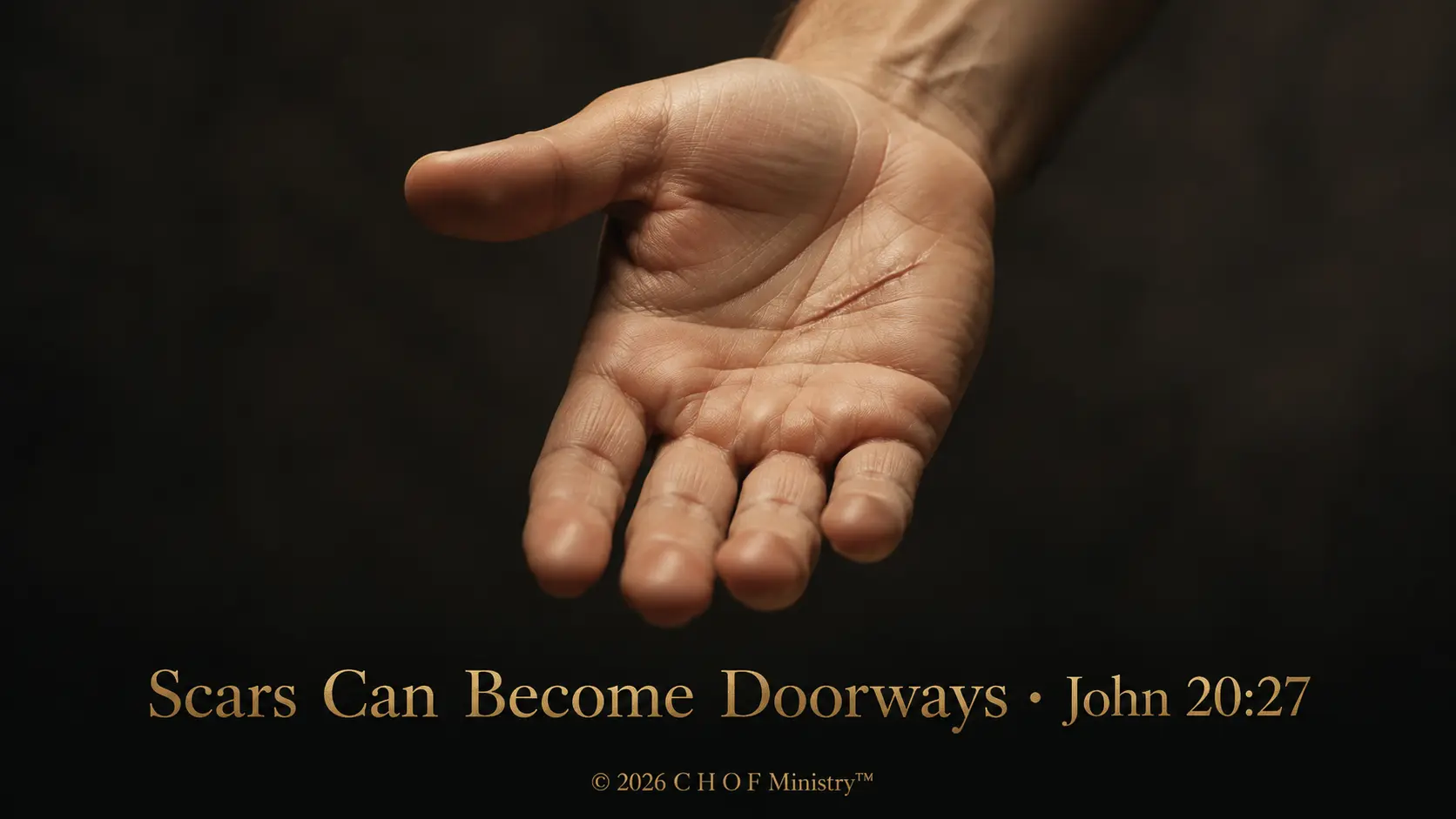
Christ Meets Thomas With His Wounded Hands
The risen Jesus meets a doubter; His wounds do not make another person’s private suffering public property.

Removed invented motives for Christ’s wounds and the demand that readers publicly disclose trauma.
Previously titled: “Your Wound Has a Job.” The existing address is retained.
About editions and corrections →FOUNDATIONAL SCRIPTURE · ESV
“Then he said to Thomas, “Put your finger here, and see my hands; and put out your hand, and place it in my side. Do not disbelieve, but believe.””John 20:27 (ESV)
WISDOM WHISPERS™
“Christ’s wounds witness to His resurrection; your own healing does not require a public platform.”— Bishop W. F. Houston Jr.
Word Studya mark or impression. In John 20:25, Thomas refers to the mark of the nails. The marks identify the risen Jesus as the crucified Lord.
THE DEVOTION
John 20:24–29 shows Jesus meeting Thomas’s stated difficulty with the testimony of the other disciples. He presents His hands and side, and Thomas confesses Him as Lord and God. The account witnesses to the risen Christ, not to a requirement that every survivor display personal wounds.
We may draw an analogy about honest testimony and the hope God can bring amid suffering. But Scripture does not disclose every reason Christ’s wounds remain, and it does not say a private wound helps no one. Prayer, healing, and service may remain quiet.
If you choose to share a difficult experience, consider readiness, consent, confidentiality, and the good of everyone involved. No ministry platform is entitled to your trauma. The gospel rests on Christ’s saving work, not on a survivor’s ability to turn pain into a public lesson.
Study the evidence
Read the surrounding argument before drawing an application. Scripture links open in a new tab.
Practice interpreting before teaching
- Observe: identify the speaker, audience, situation, and two statements the passage makes explicitly.
- Interpret: state the conclusion in your own words and explain which details support it. Mark any inference.
- Compare: give a reasonable alternative reading fairly. Explain why the context supports or weakens it.
- Apply: propose one present-day response. Identify what the passage does not promise and whose circumstances require care.
- Revise: check the title, illustration, prayer, and assignment against the same evidence. Change any statement that exceeds it.
A strong response names evidence, handles an objection fairly, and distinguishes application from the passage’s direct statement. Agreement with a teacher alone is not a demonstration of understanding.
Published commitments, teacher exercises, and revision record →
Let Us Go Into The Throne Room Of Grace And Mercy.
Prayer
BENEDICTION