
C H O F Ministry — Unified Manna™: Where Scripture Meets Innovation
Faithfulness Even in the Fire
Daniel’s companions trust God’s power without making rescue a condition of their obedience.

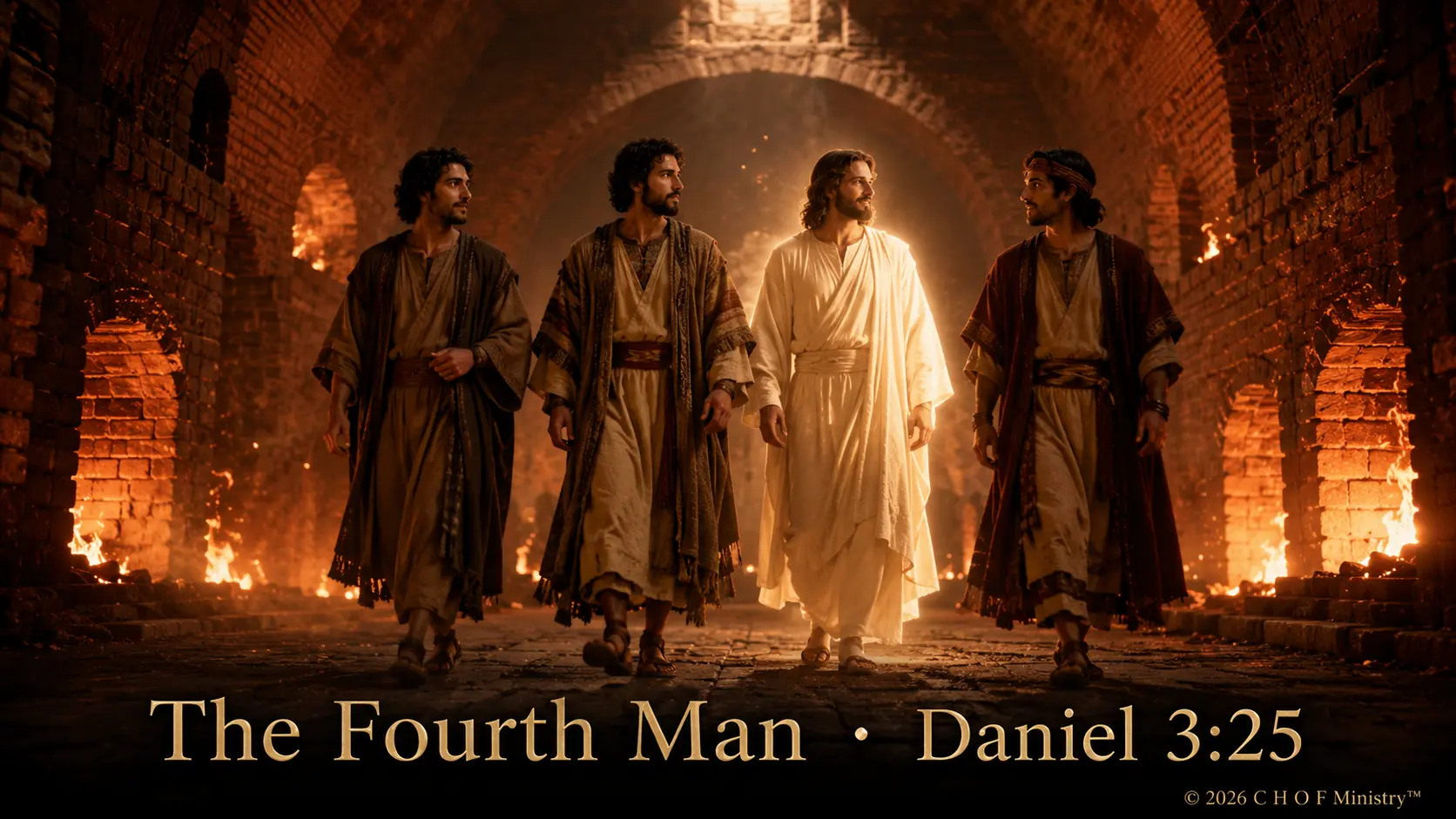
Restored Daniel 3’s refusal to make deliverance a condition of faith.
Previously titled: “The Fire Did Not Come to Kill You.” The existing address is retained.
About editions and corrections →FOUNDATIONAL SCRIPTURE · ESV
“He answered and said, “But I see four men unbound, walking in the midst of the fire, and they are not hurt; and the appearance of the fourth is like a son of the gods.””Daniel 3:25 (ESV)
WISDOM WHISPERS™
“Faithfulness trusts God without claiming that every fire will leave us unharmed.”— Bishop W. F. Houston Jr.
Word Studyto bind. Daniel 3 contrasts the men being bound with the king seeing them unbound. That their ropes burned is an inference, not an explicit statement that every fire removes only bondage.
THE DEVOTION
Daniel 3 records the refusal of Shadrach, Meshach, and Abednego to worship the king’s image. They affirm God’s ability to deliver and remain faithful even if He does not. Their confession precedes their rescue.
The king sees them unbound in the furnace, and the account later describes their unharmed bodies and clothing. Saying the ropes burned is an inference. Saying every trial will leave a believer unharmed is a promise this narrative does not make.
Trust God and refuse idolatry without demanding immunity from suffering. Seek protection against actual danger. Faithfulness can endure without calling violence good or treating rescue as the measure of a person’s faith.
Study the evidence
Read the surrounding argument before drawing an application. Scripture links open in a new tab.
Practice interpreting before teaching
- Observe: identify the speaker, audience, situation, and two statements the passage makes explicitly.
- Interpret: state the conclusion in your own words and explain which details support it. Mark any inference.
- Compare: give a reasonable alternative reading fairly. Explain why the context supports or weakens it.
- Apply: propose one present-day response. Identify what the passage does not promise and whose circumstances require care.
- Revise: check the title, illustration, prayer, and assignment against the same evidence. Change any statement that exceeds it.
A strong response names evidence, handles an objection fairly, and distinguishes application from the passage’s direct statement. Agreement with a teacher alone is not a demonstration of understanding.
Published commitments, teacher exercises, and revision record →
Let Us Go Into The Throne Room Of Grace And Mercy.
Prayer
BENEDICTION